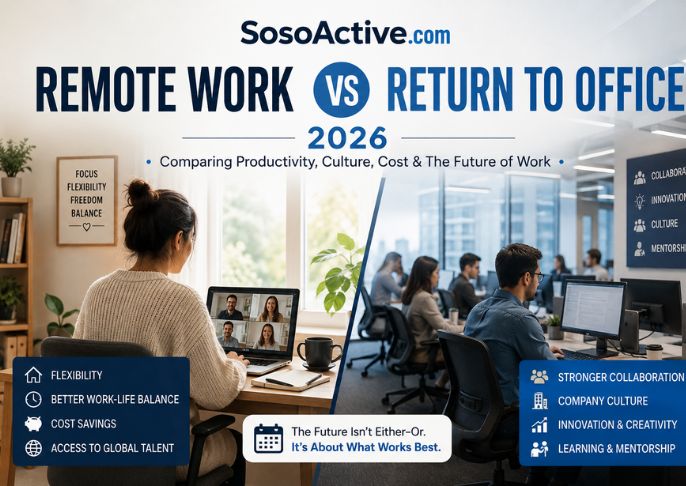
The workplace has changed dramatically over the past few years. What started as a temporary shift to remote work has evolved into a long-term strategy for many organizations. At the same time, a growing number of companies are asking employees to return to the office, creating an ongoing debate about which model works best. As businesses adapt to new technologies and employee expectations, the discussion around remote work vs return to office in 2026 is more relevant than ever.
At SosoActive.com, we closely follow workplace trends, business innovation, and technology to help professionals and business owners make informed decisions. Whether you’re an employee choosing your ideal work environment or a business leader shaping workplace policies, understanding the benefits and challenges of each model is essential.
Why the Workplace Is Still Changing in 2026
The traditional office is no longer the only place where productive work happens. Cloud computing, video conferencing, project management software, and AI-powered collaboration tools have made it possible for teams to work efficiently from almost anywhere.
At the same time, many organizations believe that in-person collaboration improves communication, creativity, and company culture. Rather than choosing one model for everyone, businesses are increasingly exploring flexible solutions that balance productivity with employee well-being.
According to workplace experts featured by SosoActive.com, the future of work is likely to be driven by flexibility rather than a single fixed approach.
What Is Remote Work?
Remote work allows employees to perform their job responsibilities outside a traditional office environment. They may work from home, coworking spaces, or while traveling, using digital tools to communicate and collaborate with colleagues.
Popular remote work tools include:
- Video conferencing platforms
- Team messaging apps
- Cloud document sharing
- Project management software
- AI productivity assistants
Remote work has become especially popular in industries such as software development, digital marketing, customer support, writing, design, consulting, and online education.
What Does Return to Office Mean?
A return-to-office (RTO) policy requires employees to work from a physical office either full-time or on selected days each week. Companies that support this model believe face-to-face interaction encourages stronger teamwork, mentorship, faster decision-making, and a stronger company culture.
Some organizations have adopted mandatory office attendance, while others have introduced hybrid schedules where employees split their time between home and the office.
At SosoActive.com, we’ve observed that return-to-office policies vary widely depending on industry, company size, and job role.
Benefits of Remote Work
Better Work-Life Balance
One of the biggest advantages of remote work is flexibility. Employees can often organize their schedules more effectively, reducing commuting time and allowing for a better balance between personal and professional responsibilities.
Increased Productivity
Many professionals report that they complete tasks more efficiently when working in a quiet environment with fewer office distractions. Remote work also allows individuals to create workspaces that suit their personal preferences.
Lower Expenses
Working from home can reduce transportation costs, parking fees, and daily spending on meals. Employers may also save money on office space and operational expenses.
Access to Global Talent
Businesses are no longer limited to hiring candidates who live near their offices. This broader talent pool helps organizations recruit skilled professionals from different regions and backgrounds.
According to insights shared by SosoActive.com, companies embracing remote hiring often gain access to specialized talent that may not be available locally.
Challenges of Remote Work
Despite its advantages, remote work is not without challenges.
Communication Barriers
Virtual communication can sometimes lead to misunderstandings or delays, especially when team members work in different time zones.
Isolation
Some employees miss the social interaction and spontaneous collaboration that naturally occur in an office environment.
Work-Life Boundaries
Without a clear separation between work and home, some people find it difficult to disconnect after working hours, increasing the risk of burnout.
Cybersecurity Risks
Remote work requires secure internet connections, updated software, and strong cybersecurity practices to protect sensitive business information.
Benefits of Returning to the Office
Stronger Team Collaboration
Face-to-face discussions can make brainstorming sessions, project planning, and decision-making more effective.
Better Mentorship
New employees often benefit from direct guidance, coaching, and learning opportunities that are easier to provide in person.
Stronger Company Culture
Office environments help employees build relationships, celebrate achievements, and feel connected to the organization’s mission and values.
Easier Access to Resources
Some roles require specialized equipment, secure networks, or facilities that are only available in an office setting.
Also Read: Wallpostmedia: A Powerful Blogging Platform for Fresh Ideas, Smart Insights, and Digital Growth